.png?width=1920&height=410&name=RamBase-Logo-Standard-Dark%20(5).png)


Many Electronics Manufacturing Services (EMS) companies don't struggle because they lack technical expertise, they struggle because operational complexity grows faster than the systems supporting the business. As customer demands, supply chain risks and compliance requirements increase, maintaining visibility and control becomes critical to protecting margins, ensuring delivery performance and supporting sustainable growth. The right ERP platform provides the foundation for managing that complexity with confidence.
RamBase Cloud ERP has been developed with high-tech electronics manufacturers and supply chain businesses in mind. By connecting sales, purchasing, inventory, production, logistics, finance, quality and documentation in one cloud-based platform, it helps EMS companies move from fragmented operations to real-time control across the business.
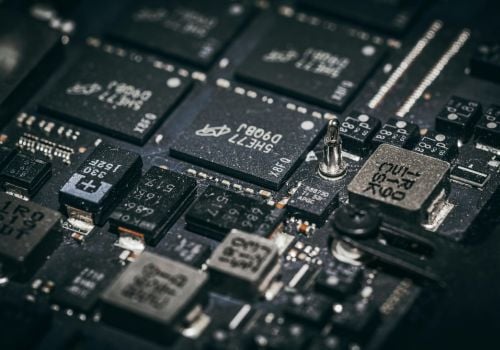
Built from electronics roots, not adapted later
RamBase has a different origin story from many ERP systems used in manufacturing today. Its roots go back to Vats in Norway, where Jakob Hatteland built a business around buying and selling electronics and computer components. The original need was practical and commercial: customers wanted the right product, at the right time and at the right price. To achieve that, the business needed complete control of information across components, availability, pricing, margins and customer commitments.
That operational need led to the development of the business system that later became RamBase. Unlike many ERP platforms, RamBase was not designed as a generic solution and adapted to electronics manufacturing later. It was built from the realities of electronics trading, supply chain control and manufacturing complexity.
Today, while the challenges have evolved to include global supply chains, stricter quality requirements, greater traceability expectations and increasing customer demands, the fundamental principle remains unchanged: control the information, and you control the business.
For EMS manufacturers, that means having visibility across sales, purchasing, inventory, production, logistics, finance and quality in one connected environment. It means knowing what you have, what it costs, what you can deliver and where risk is emerging before it impacts customers.
The real challenge for EMS leaders: complexity without loss of control
Most EMS businesses do not fall short because they lack technical capability. They struggle because complexity builds faster than the systems supporting the business.
A typical EMS manufacturer may be managing customer forecasts, engineering changes, component substitutions, long supplier lead times, batch and serial traceability, purchase commitments, quality documentation, customer-specific build requirements, outsourced operations, test processes and finance visibility - all at the same time.
When these processes sit across disconnected systems, spreadsheets and manual workarounds, leadership teams quickly lose confidence in the numbers. Stock may look available but not be usable. A production plan may appear achievable but depend on components that are delayed. Margins may look healthy on paper but erode through rework, expedite costs or poor visibility of actual production effort. Quality data may exist but be difficult to connect back to materials, suppliers, builds and customer deliveries.
For EMS leaders, this creates a familiar challenge: the business is busy, but not always fully in control. A modern ERP platform should help change that. It should not simply record transactions after the event. It should provide a live operating model that helps teams understand what is happening, what is at risk and where performance can be improved.
1. Better visibility from quote to cash
In EMS manufacturing, visibility is not a reporting benefit. It is a management requirement.
From the moment a customer inquiry becomes a quotation, the business needs to understand availability, lead times, cost assumptions, production capacity, supplier dependencies and potential delivery risk. Once the order is won, those assumptions need to flow into purchasing, production, logistics and finance without repeated manual re-keying.
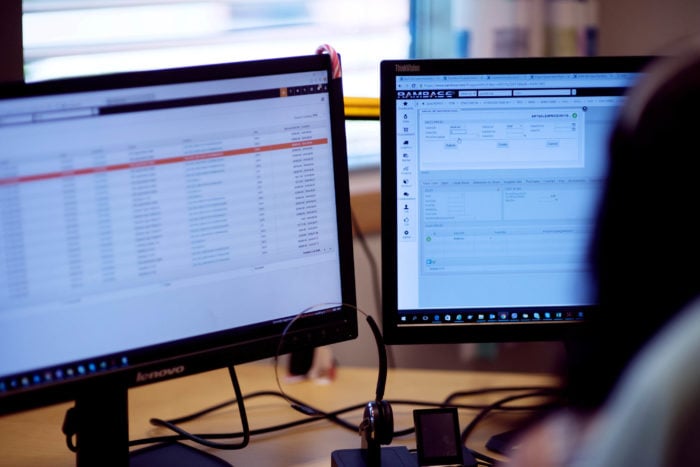
RamBase supports this by connecting the core value chain in one system. Sales, procurement, production, inventory, finance and logistics are not treated as separate islands. They are part of the same process.
This matters because EMS businesses often operate with tight margins and changing demand. If leadership teams cannot see what is happening across the order book, stock position, production plan and cash position, decisions become reactive.
Dynamic Precision, a leading electronics manufacturer, selected RamBase after facing challenges with an outdated ERP system that lacked the flexibility and real-time data needed for modern manufacturing. The business needed better inventory and production control, improved regulatory compliance and greater visibility across sales, production and finance. With RamBase, the company gained a more integrated way to manage daily operations, including production, logistics, finance and procurement.
For EMS leaders, this is the important point: the value of ERP is not just process automation. It is giving managers and decision-makers a clearer, more reliable view of the business as it operates.
2. Stronger control of materials, lead times and component risk
Material availability is one of the biggest operational risks in electronics manufacturing.
A production plan is only as reliable as the supply chain behind it. EMS companies need to manage long lead-time components, supplier performance, substitutions, obsolete parts, fluctuating demand and customer-specific requirements. Without accurate, real-time inventory and purchasing data, the business can easily end up over-buying, under-buying or discovering shortages too late.
RamBase is designed to support material planning, stock visibility and supplier control in fast-moving electronics environments. For EMS businesses, this means better visibility of what is available, what is committed, what is needed and what could affect delivery.
Dynamic Precision’s story is a strong example. Before moving to RamBase, the company faced issues including limited real-time inventory tracking and production traceability. After implementation, RamBase helped improve production efficiency through real-time inventory tracking, optimise material planning through MRP and improve logistics across inbound and outbound processes.
For an EMS manufacturer, that can translate into fewer surprises, better purchasing decisions, more confident production planning and stronger customer communication.
3. Traceability that supports quality, compliance and customer confidence
Traceability is a board-level issue in high-tech electronics manufacturing.
Customers increasingly expect proof. They want to know what was built, when it was built, which components were used, which supplier batches were involved, what testing was completed, what documentation exists and how issues would be contained if a problem emerged later.
For EMS businesses serving demanding sectors such as defence, aerospace, marine, medical, industrial electronics or high-reliability applications, traceability is not optional. It is part of the value proposition.
RamBase helps manufacturers connect materials, production activity, quality records and documentation across the business. Instead of quality and traceability sitting outside ERP in files, spreadsheets or standalone systems, they become part of operational execution.
Hatteland Technology demonstrates the importance of this. Operating in markets such as aerospace and marine, the company uses RamBase as a management tool across the business. Its team highlights the need for high standards of quality and documentation in all processes, with RamBase helping the organisation maintain control over components, documents, finance and wider operational activity.
This is highly relevant for EMS manufacturers. Quality cannot be treated as a department that checks work after production. It needs to be embedded into the flow of the business, from purchasing and goods-in through production and testing to delivery and after-sales support.
4. Reducing manual work and improving management confidence
Many EMS businesses have grown around legacy systems, spreadsheets and local knowledge. That can work for a time, especially when the business is smaller. But as customer demands increase, product complexity grows and more people become involved, manual processes become a constraint.
The symptoms are familiar:
- Quoting depends on individual experience rather than consistent data.
- Production planning requires spreadsheet manipulation.
- Finance needs manual reconciliation to understand cash, backlog or work in progress.
- Quality documentation takes too long to prepare.
- Managers spend too much time chasing updates rather than acting on reliable information.
RamBase helps reduce this reliance on disconnected manual work by bringing key processes into one platform. JST UK is a useful reference point. The business needed a system that could support distribution, manufacturing and rental while improving inventory management and real-time stock visibility. RamBase was selected to help streamline operations, reduce manual workloads and provide a stronger foundation for future growth.
For EMS manufacturers with mixed operating models - for example electronics assembly, distribution, repairs, kitting, rental assets, subcontract operations or value-added services - this breadth matters. The value is not just in supporting one process well. It is in joining multiple parts of the business together so leadership can manage the whole operation with greater confidence.
5. Supporting growth without adding unnecessary complexity
Growth can expose weaknesses in an EMS manufacturer's operating model. More customers, more orders, more products, more suppliers and more documentation do not automatically create a stronger business. Without the right systems, growth can create more pressure, more firefighting and more hidden cost.
A modern ERP system should help an EMS manufacturer scale with discipline. It should support standard processes, clearer ownership, better data, stronger planning and more consistent execution across departments.
Westcontrol, an electronics manufacturing services provider, is a strong example of this mindset. As a turnkey supplier that designs, develops and manufactures products for multiple industries, Westcontrol uses RamBase to support continued growth and operational control. The relevance for EMS businesses is clear: when design, manufacturing, supply chain and customer delivery are closely connected, the ERP platform needs to support the full operating model, not just individual transactions.
This is particularly important for ambitious EMS manufacturers. The right ERP platform should help the business grow without simply adding more administration, more spreadsheets or more management meetings to compensate for weak visibility.
6. A platform for the wider high-tech electronics supply chain
Although EMS is the primary focus, the same pressures are felt across the wider high-tech electronics supply chain. Electronics manufacturers, component distributors, embedded technology businesses, industrial electronics suppliers, contract manufacturers and technology-led product companies all face similar challenges: complex products, strict customer expectations, long lead times, documentation requirements and the need for reliable delivery.
RamBase has evolved around these types of businesses. It is not a generic ERP system retrofitted for manufacturing. It is built around the needs of companies that require control across purchasing, inventory, production, quality, logistics, finance and compliance.
That makes it relevant not only for EMS providers, but also for companies operating across adjacent models such as electronics distribution, high-tech product manufacturing, build-to-order production, technical assembly, subcontract manufacturing and regulated supply chains.
What this means for EMS CEOs and Managing Directors
For an EMS leader, ERP should be judged by its ability to improve business performance, not by the length of its feature list.
The key questions are commercial and operational:
- Can we see what is happening across the business in real time?
- Can we quote, plan, buy, build, test, deliver and invoice with fewer manual steps?
- Can we protect margin by improving material control, production visibility and financial oversight?
- Can we prove quality and traceability when customers, auditors or regulators ask?
- Can we support growth without losing control?
- Can our teams make better decisions because they trust the data?
RamBase Cloud ERP is designed to help answer those questions. It gives EMS manufacturers and high-tech electronics businesses a connected platform for managing the full value chain, from customer demand and material planning through to production, logistics, quality, finance and continuous improvement.
RamBase started with the same core challenge that EMS manufacturers still face today: how to control information across a complex electronics business so the company can deliver the right product, at the right time, at the right cost and with confidence.
That origin story is still reflected in customer successes today.
Dynamic Precision demonstrates the value of real-time visibility, production control and integrated finance.
Hatteland Technology highlights the importance of quality, documentation and management oversight in demanding markets.
JST UK shows how RamBase can support a business spanning distribution, manufacturing and rental.
Westcontrol demonstrates how an electronics manufacturing services provider can use RamBase as a foundation for continued growth.
For EMS manufacturers looking to modernise, the message is simple: the right ERP system should not just help you run today's operation. It should help you build the next stage of the business.
If you are reviewing ERP options for an EMS or high-tech electronics manufacturing business, RamBase can help you identify where operational control is being lost today and where a more connected platform could deliver measurable value across planning, purchasing, production, quality, finance and customer delivery.
Curious about RamBase?
Talk to one of our experts and explore how RamBase helps manufacturing companies gain control, improve margins, and deliver with confidence.






-1.png?width=800&name=Untitled%20design%20(11)-1.png)